Overview
- V-Cycling is a technological solution designed to enable Functional Electrical Stimulation (FES)-assisted cycling for patients in different clinical and rehabilitation contexts, including sedated patients or those with significant functional limitations.
- By integrating intelligent neuromuscular electrical stimulation and an inertial sensor for pedal-angle synchronization, V-Cycling enables coordinated cyclic movements in a safe, controlled, and evidence-based way.
- The solution was designed to support structured early-mobilization protocols across care settings, helping prevent complications associated with prolonged immobility — such as ICU-acquired weakness —, preserving muscle mass and improving functional prognosis, including in critically ill patients.
HOW
V‑Cycling WORKS
V-Cycling is built on three technological pillars:
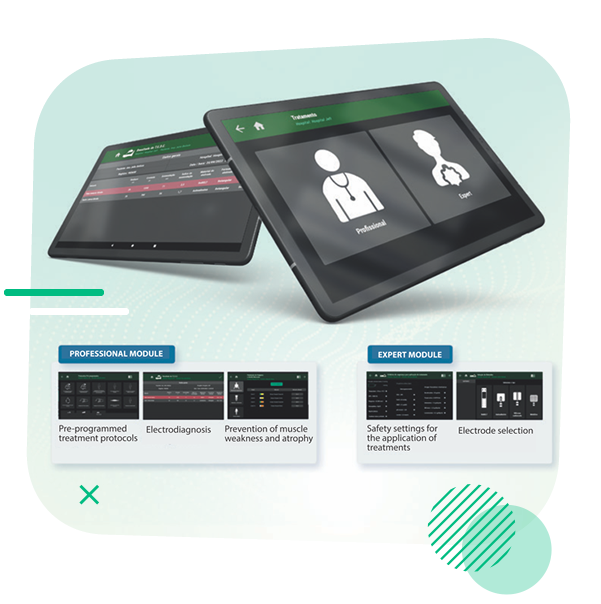
- 1 - Functional Electrical Stimulation (FES): Through ReCARE®, the system generates coordinated muscle contractions even without voluntary patient effort. Activation is programmed and safe, respecting individualized physiological parameters.
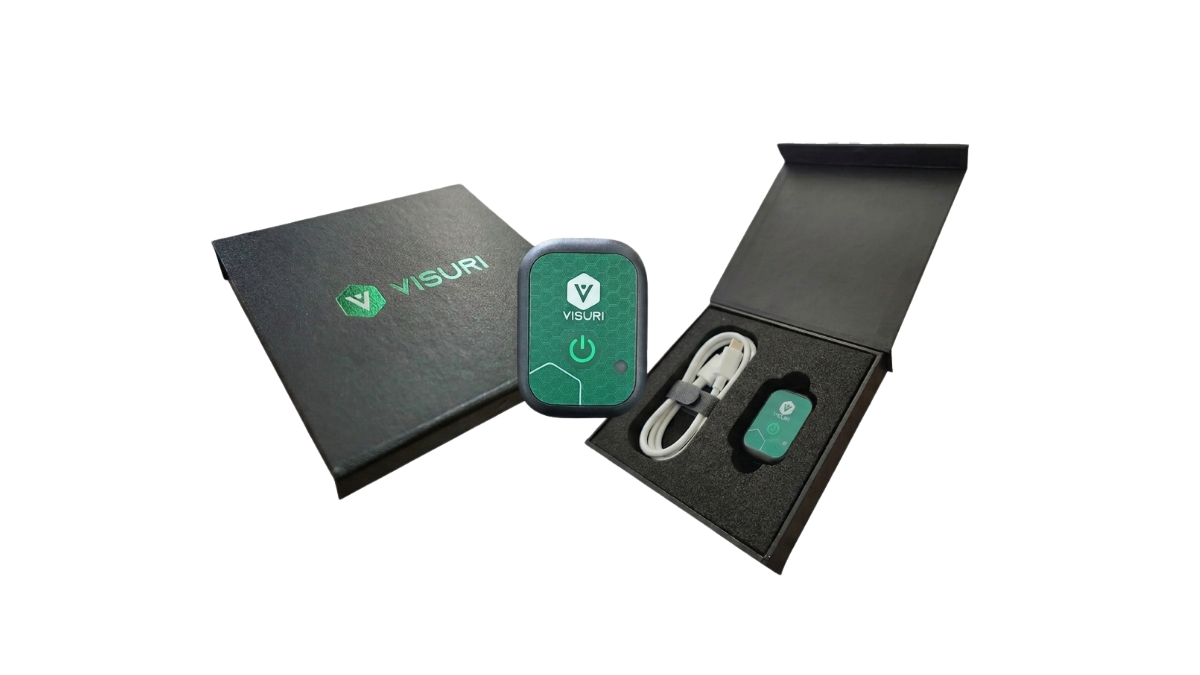
- 2 - Inertial Sensor: A Bluetooth system that identifies the pedaling angle in real time.
- 3 - Smart Integration with the Cycle Ergometer: V-Cycling automatically synchronizes muscle activation with the pedal cycle, allowing coordinated functional movement even in sedated patients. The solution is compatible with different cycle ergometers, maintaining operational flexibility across clinical environments.

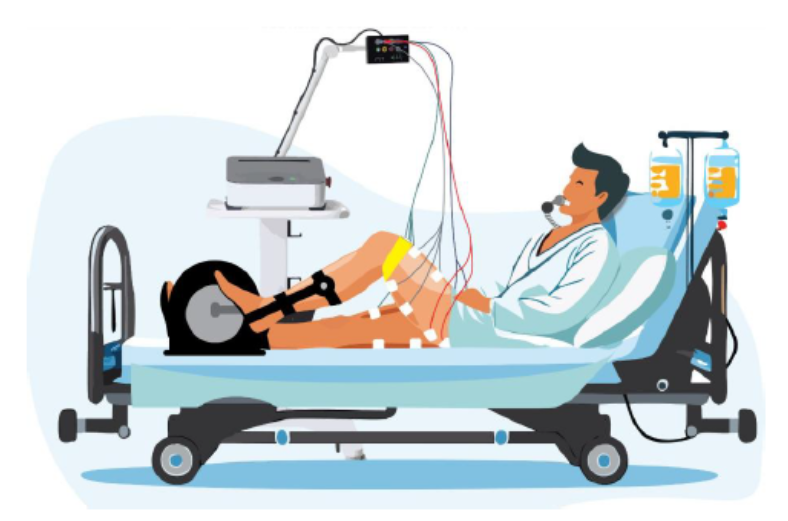
System assembly schematic illustration!
*Illustrative image only. THE SOLUTION DOES NOT INCLUDE THE CYCLE ERGOMETER.
TECHNOLOGICAL DIFFERENTIALS
- Smart integration with ReCARE®
- Applicable to sedated and non-cooperative patients
- Compact and simplified system
- Structured based on scientific validation
- National technology focused on clinical rehabilitation

TECHNOLOGICAL RELEVANCE
V-Cycling represents an advance in neuromuscular support applied to rehabilitation, offering a technological alternative for mobilizing patients with functional limitations.
The solution contributes to:
- Reduction of the effects of prolonged immobility.
- Stimulation of coordinated muscle activation even in the absence of voluntary movement.
- Systematization of rehabilitation protocols.
- Optimization of functional recovery time.
Do you want to implement
V‑Cycling in your institution?
Talk to our team and learn more about the solution!
FES is also SNA!
Advanced neuromuscular support
Advanced neuromuscular support